This page contains affiliate links. If you make a purchase through one, we may earn a commission at no extra cost to you.
Fabric noise gives away more close-range shots than most hunters realize — a stiff or crinkly outer layer brushing against a tree or your own body can carry surprisingly far in quiet conditions. Here’s what actually makes clothing loud or quiet, and what to check before buying.
What Actually Makes Fabric Loud
Stiff, crinkly synthetic shells are the most common noise culprit — the same fabric qualities that make a jacket waterproof and durable can also make it noisy when it brushes against brush, your pack straps, or your own body while walking. Soft-surfaced fabrics like fleece, brushed tricot, and wool absorb sound instead of reflecting it as a sharp rustle, which is why they’re consistently recommended for close-range hunting like treestand bowhunting.
Cold Makes Everything Louder
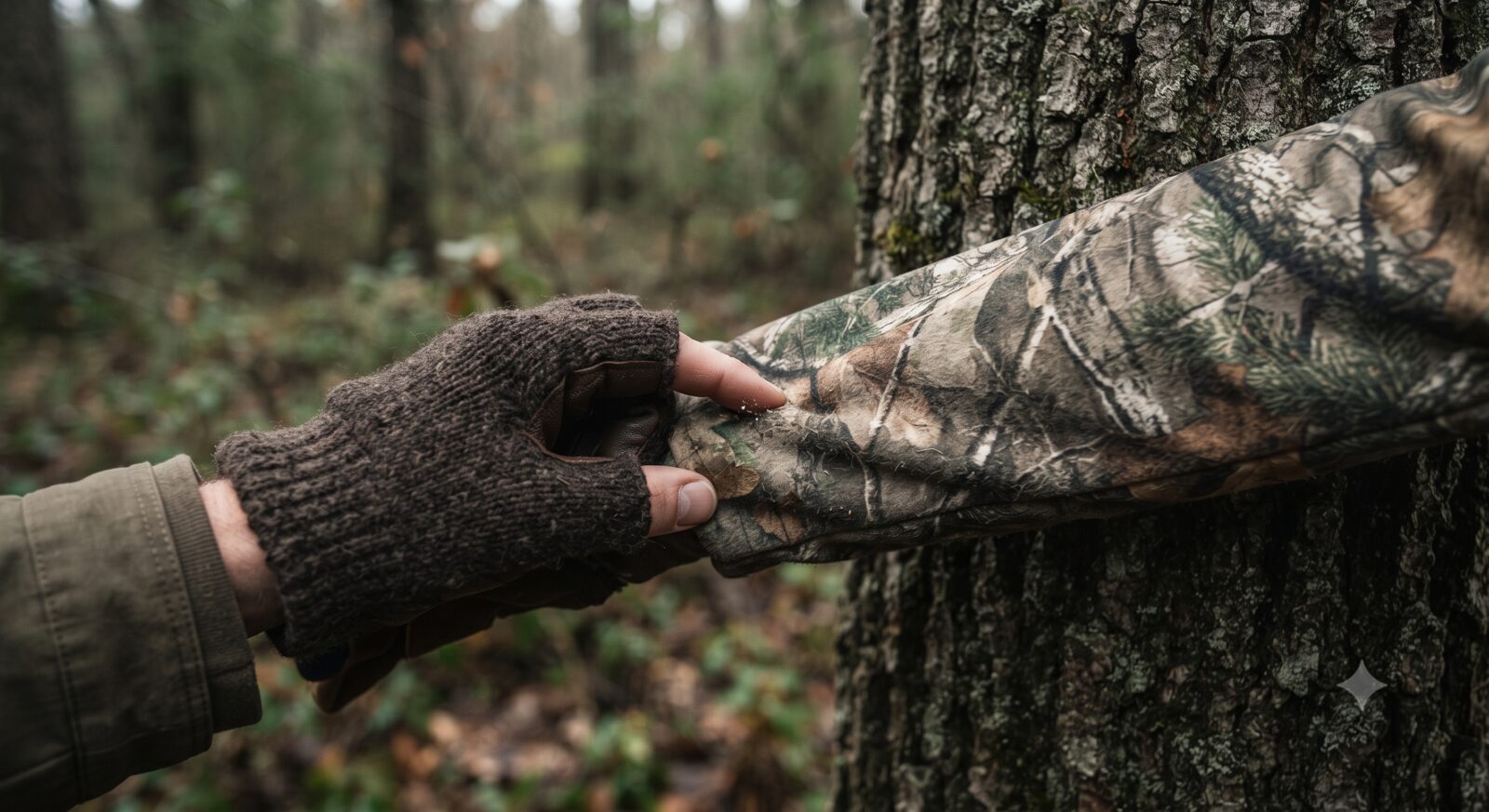
A fabric that feels reasonably quiet at moderate temperatures can stiffen and get noticeably noisier once it’s genuinely cold out. This is worth specifically testing before a late-season hunt if you’re relying on an outer layer that felt fine during an early-season trial — cold-weather quietness isn’t automatically the same as warm-weather quietness for the same piece of gear.
Sweat and Moisture Change Fabric Behavior Too
Fabric that’s soft and quiet when you set out can stiffen as sweat builds up during a hike in and then cools once you stop moving and settle into a stand. This is a real, easy-to-overlook factor — the noise problem isn’t always about the fabric itself, sometimes it’s about what’s happened to that fabric over the course of getting to your spot.
Quieting Down Gear You Already Own
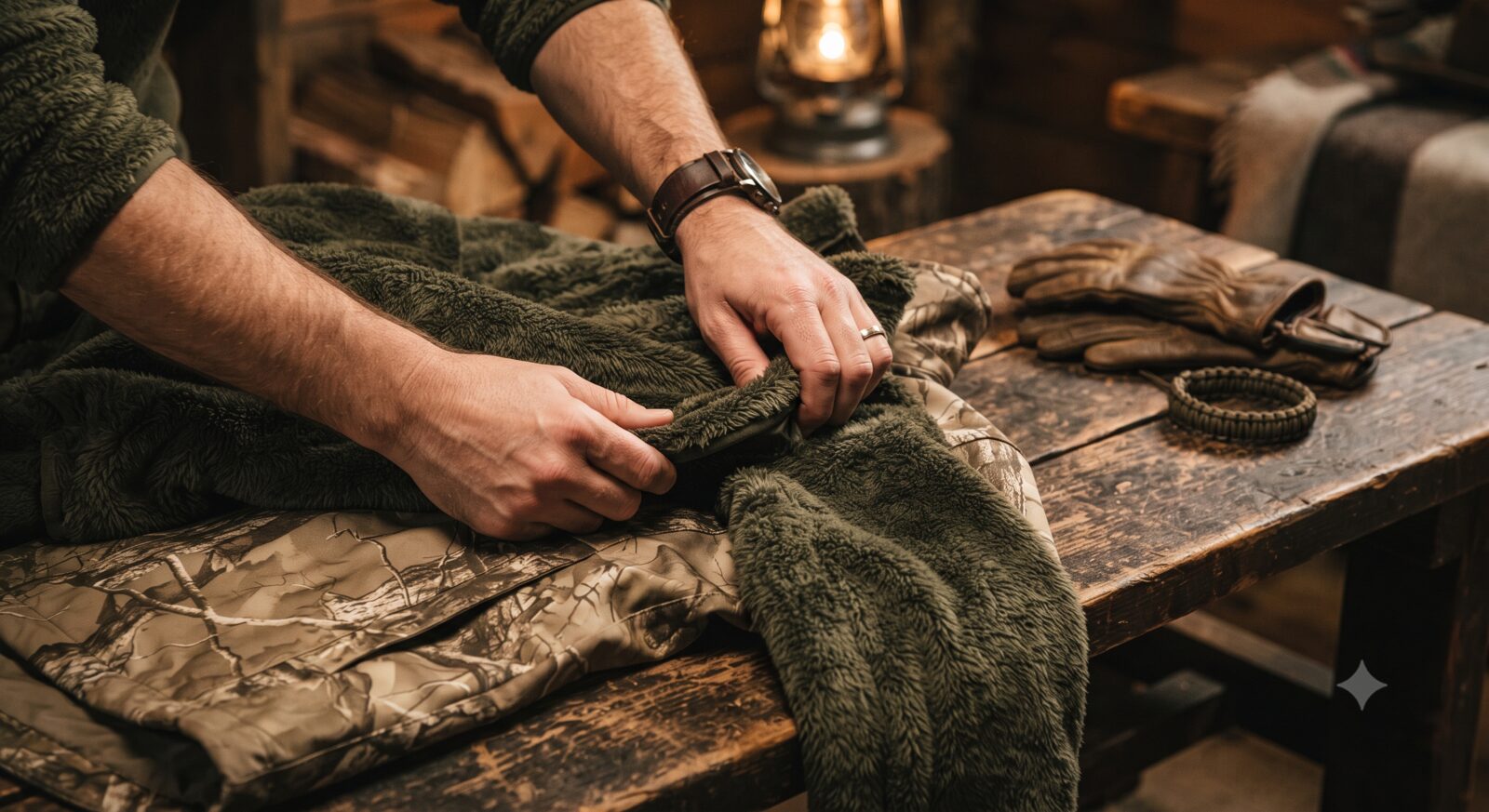
Replacing an entire outer layer isn’t always necessary or affordable, and there’s real, practical middle ground before buying anything new. A quick pass over the fabric with a fabric softener spray made for outdoor gear can noticeably calm a crinkly shell for a hunt or two, though it’s a temporary fix, not a permanent one. Taping down or trimming loose pack straps and zipper pulls addresses the “accessory noise” that often gets blamed on the jacket itself. Layering a soft fleece or wool piece over a noisier synthetic shell muffles the surface rustle without needing to replace the shell at all — a genuinely underused trick for hunters who already own gear that’s louder than they’d like. King’s Camo’s soft-shell pieces are worth comparing directly if none of these workarounds get you where you need to be.
Construction Details That Matter Beyond the Fabric Itself
- Soft linings: reduce friction noise between layers, not just the outer surface against branches.
- Quiet seam construction: cheaper construction often means seams that add their own rustle — worth checking reviews specifically for noise complaints, not just weatherproofing.
- Loose hanging straps or tags: often overlooked, but a flapping pack strap or loose zipper pull can be as noisy as the jacket fabric itself.
Where This Matters Most
Fabric noise matters most for close-range hunting — bowhunting from a stand or ground blind, or any situation where game may be within easy earshot for an extended period. For longer-range rifle hunting where you’re not expecting close encounters, fabric noise is a real but smaller factor compared to scent and visual concealment.
Check the fabric details on King’s Camo’s XKG line if quiet movement is a priority for how you hunt.
Fabric choice also matters for warmth, not just noise — see our guide on the cold-weather layering system every hunter should know.
Frequently Asked Questions
Is wool really quieter than synthetic fabrics?
Generally, yes — wool’s soft fiber structure absorbs sound rather than producing the sharp rustle that stiffer synthetic shells can. It’s often considered a strong choice specifically for close-range, sit-still hunting for this reason.
Can I test how quiet a jacket is before buying it?
If you can try it on in person, rubbing the sleeve against itself and against a rough surface gives a rough sense of noise level. Online, checking reviews specifically for noise complaints is more reliable than product descriptions, which rarely address it directly.
Does a quieter fabric mean it’s less durable or less waterproof?
Not necessarily, but there’s often a real tradeoff — the stiffer laminates that make a shell highly waterproof can also make it noisier. Matching the priority (quiet versus weatherproofing) to your actual hunting conditions is worth thinking through rather than assuming one fabric does everything best.