
This page contains affiliate links. If you make a purchase through one, we may earn a commission at no extra cost to you.
Camo pattern selection isn’t a style preference — it’s a genuinely terrain- and season-specific decision, and getting it wrong costs you more than looking slightly out of place. Here’s how to actually match a pattern to where and when you’re hunting.
Woodland: Dense Forest, Early Season
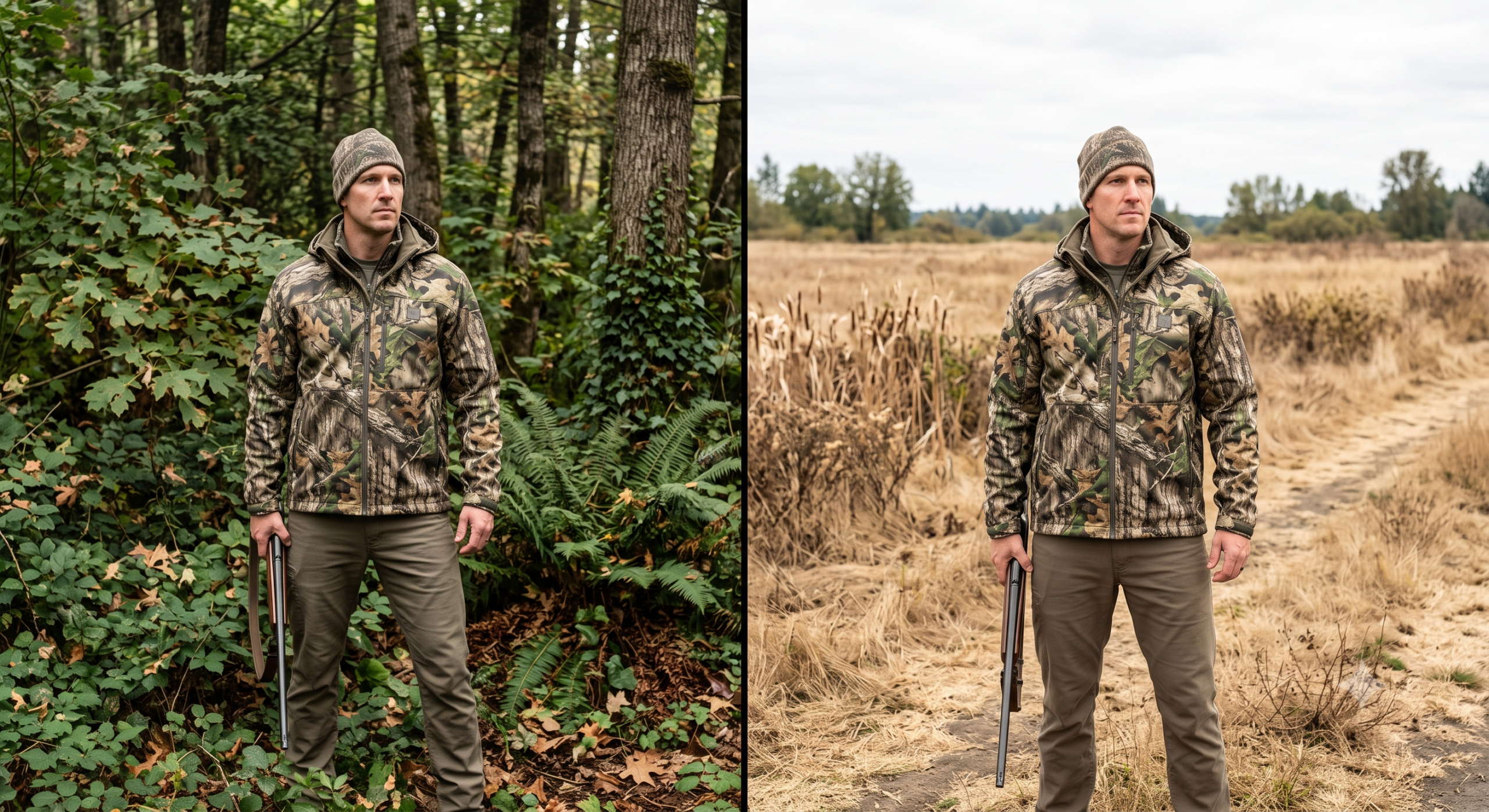
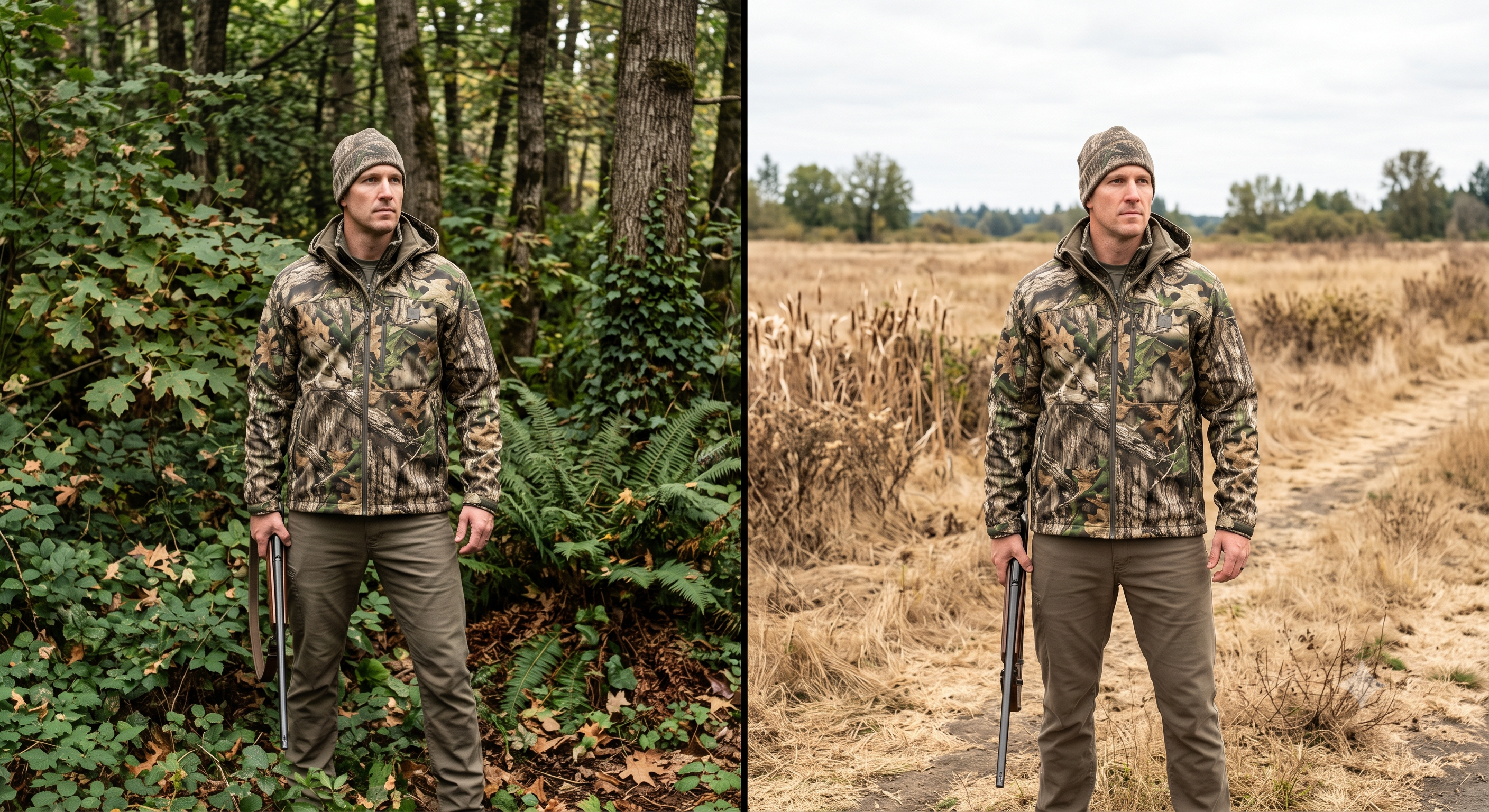
Dense forest cover in early season — while leaves are still on the trees and undergrowth is thick — calls for a pattern with strong mid-tone greens and browns and enough visual complexity to break up your outline against a busy, layered background. A pattern that’s too light or too open-terrain-oriented stands out starkly against dense green cover, undoing the whole point of wearing camo in the first place.
Open Terrain: Fields and Farmland
Fields, farmland, and other open agricultural terrain want the opposite approach — lighter tan and brown tones that match dried grass, harvested crop rows, and exposed dirt, rather than the deep greens suited to forest cover. A woodland pattern in an open field does the reverse of what it’s supposed to: it creates a dark, solid-looking blob against a light background instead of breaking up your silhouette.
Mountain and Rocky Terrain
Mountain and rocky terrain calls for a different approach entirely — neutral gray and tan tones in a more abstract, less organic-looking pattern, since rock faces and scree don’t have the same kind of natural leaf-and-branch texture that woodland patterns are designed to mimic. A pattern built for dense forest reads as visually wrong against open rock in a way that’s surprisingly noticeable at a distance, even to non-hunters.
Marsh and Wetland
Waterfowl and marsh hunting is specific enough to warrant its own dedicated pattern category — reeds, cattails, and standing water create a visual environment that neither a forest nor an open-field pattern handles well. A genuine marsh-specific pattern, built around the vertical lines and muted browns of reed cover, is worth the investment if wetland hunting is a real part of your season rather than an occasional trip.
Seasonal Shifts: Spring Greens to Fall Break-Up
The same terrain looks meaningfully different across a season, and pattern choice should shift with it. Early spring calls for brighter, fresher greens matching new growth; by late fall, foliage has died back into browns, grays, and the darker, high-contrast “break-up” style patterns built to match bare branches and fallen leaves rather than living vegetation. Hunting the same patch of woods in April and November with the identical pattern means being genuinely well-matched to your surroundings for only part of that range.
Where King’s Camo’s Lineup Actually Fits
King’s Camo builds its pattern lineup around exactly this terrain-and-season logic rather than offering one do-everything pattern — their range covers the open-terrain and mountain end of the spectrum particularly well, which is a genuine gap in a lot of competing lineups that lean heavily woodland-first. If your season includes real elevation or open-country stalking alongside standard timber hunting, it’s worth checking their pattern breakdown specifically rather than assuming one pattern from any brand covers everything equally well.
See King’s Camo’s current pattern lineup and match it against your actual terrain and season, not just whichever pattern looks best in a product photo.
Why “Close Enough” Patterns Underperform More Than You’d Expect
It’s tempting to treat pattern selection as a minor detail compared to scent control or layering — but a genuinely mismatched pattern is one of the few gear choices that actively works against you rather than just being suboptimal. Game animals’ vision is tuned to motion and outline far more than to color specifically, which means a pattern that fails to break up your silhouette against the actual background you’re standing in front of undoes camouflage’s entire function, regardless of how good the pattern looks up close on a hanger.
A Practical Two-Pattern Approach for Most Hunters
Very few hunters actually need five separate patterns for five separate terrain types. A practical, realistic approach for someone hunting a mix of conditions: one mid-tone pattern that handles woodland and early-season conditions well, and one lighter, more open pattern for late-season and field-edge situations. This two-pattern approach covers the large majority of real hunting scenarios without requiring a full wardrobe of terrain-specific gear, and it’s a more honest recommendation than suggesting every hunter needs a pattern for every possible terrain they might someday encounter. King’s Camo’s pattern lineup covers both ends of this two-pattern approach if you’re starting from scratch.
For the budget side of this decision — whether two patterns is actually worth the cost versus committing to one — see our guide on how many camo patterns you actually need.
Frequently Asked Questions
Does camo pattern actually matter, or is scent control the only thing that counts?
Both matter, for different senses. Scent control addresses smell, which is a deer’s most acute sense; pattern and movement discipline address sight, which matters most for close-range detection and for species and situations where wind isn’t consistently in your favor.
Is it worth buying a separate pattern just for late season?
If late season is a meaningful part of your hunting calendar, yes — the visual difference between early and late-season cover is significant enough that a dedicated darker, more break-up-style pattern is a real upgrade, not a marginal one.
How do I know which pattern actually matches my specific hunting area?
Take a photo of your actual hunting spot in the season you’ll be there, and compare it directly against pattern photos rather than relying on marketing descriptions like “woodland” or “open country” alone — terrain varies enough regionally that the general category is a starting point, not a guarantee.