This page contains affiliate links. If you make a purchase through one, we may earn a commission at no extra cost to you.
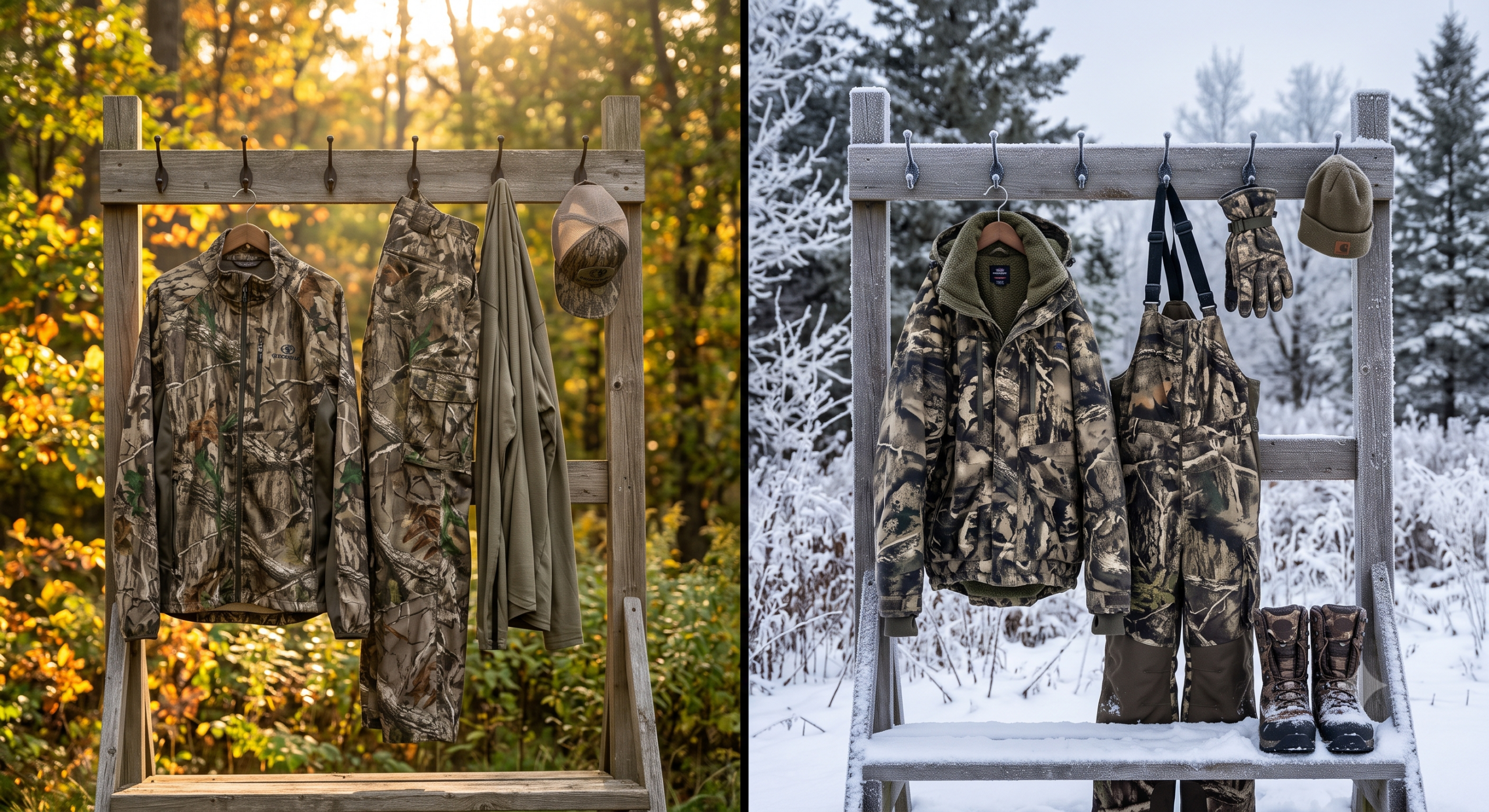
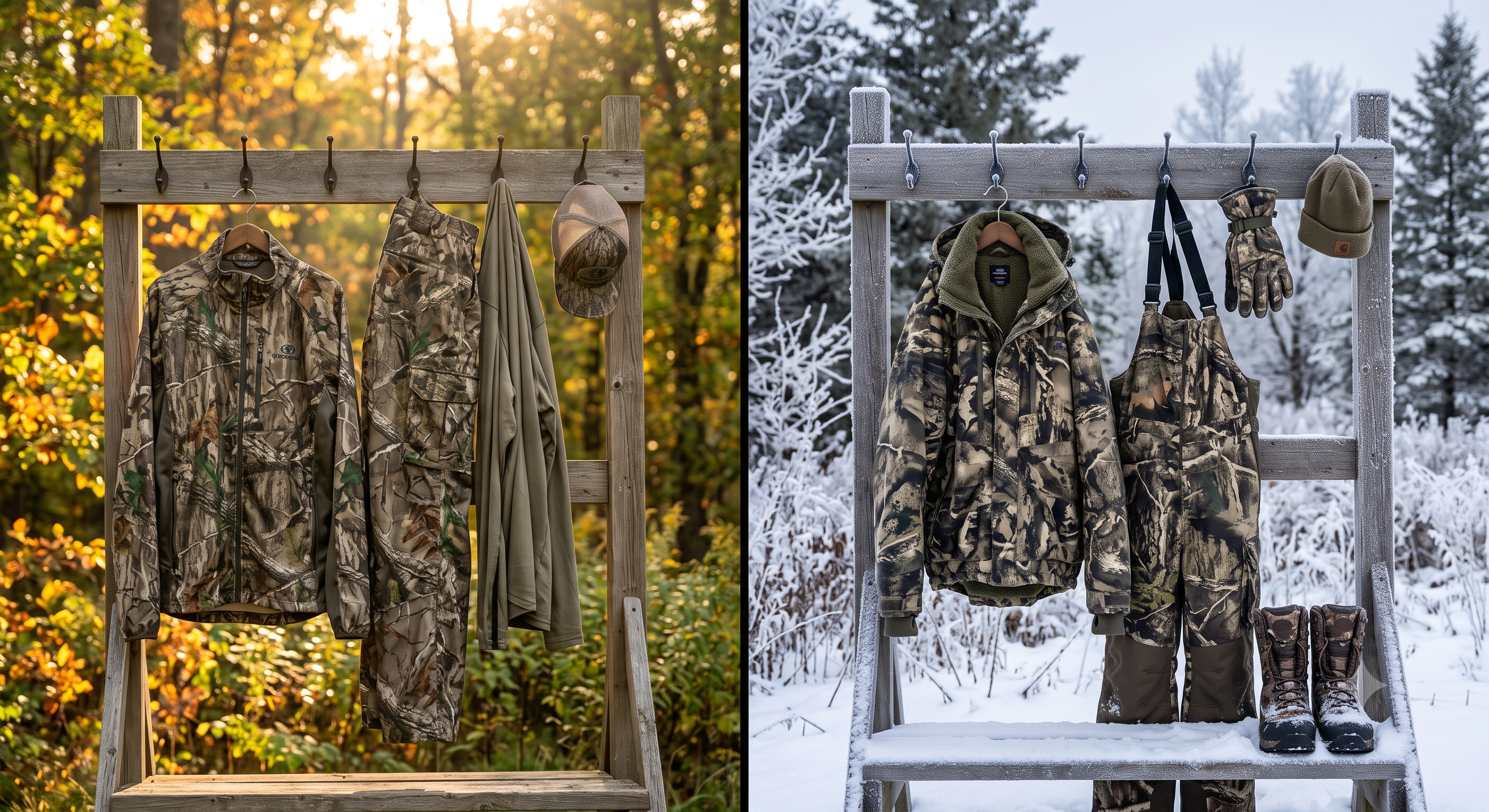
Early and late season hunts aren’t just “warmer” and “colder” versions of the same setup — they demand genuinely different clothing priorities, and dressing for one with the other’s mindset is a common way to either overheat and sweat through a stalk or freeze out a sit before it produces anything. King’s Camo’s XKG line spans lightweight early-season pieces through heavier late-season layers, which makes it a reasonable reference point for walking through what actually changes between the two.
Early Season: Heat Management Is the Real Problem
Early-season hunts often run warm enough that the actual risk isn’t cold — it’s sweating through your base layer during the walk in and then sitting in soaked clothing once the temperature does drop at dawn or dusk. The priority shifts almost entirely to breathability and moisture management rather than insulation:
- Lightweight, highly breathable base layers matter more than warmth rating. A base layer that manages sweat well in 60-70°F conditions is doing more real work than a heavier one that traps heat you don’t need yet.
- Minimal or no mid layer for most of the day — carry it rather than wear it, and add it only once you’re settled into a stand as temperatures drop toward evening.
- Ventilated or lightweight camo over heavier technical fabric — early-season patterns that prioritize breathability over wind-blocking match the actual conditions better.
Scent management is also a bigger factor early season specifically because you’re sweating more — see our scent-control breakdown for why the wash-and-storage regimen matters even more when heat and exertion are working against you.
Late Season: Insulation and Wind-Blocking Take Over
Late season flips the priority almost entirely. You’re typically sitting still for longer stretches in genuinely cold, often windy conditions, and the walk-in heat problem becomes secondary to not losing core temperature during a long, motionless sit:
- Full three-layer system, worn as a system — see our cold-weather layering guide for the base/mid/outer breakdown. Late season is where all three layers earn their place at once, rather than being optional depending on conditions.
- A genuinely wind-blocking outer shell. Wind chill during a long late-season sit does more real damage to comfort and hunt duration than raw temperature alone — an outer layer that actually blocks wind matters more here than it did early season.
- Insulated boots and heavier socks. Feet lose heat fastest during a stationary sit, and this is where late-season-specific gear (rather than your early-season boots) actually earns the extra weight and cost.
The walk-in overdressing mistake still applies late season too — dress for the walk, not the stand, and add the heaviest layer once you’ve stopped moving rather than starting the hike already fully bundled.
The Shoulder-Season Trap
Mid-season — roughly the weeks between true early and true late conditions — is where the early/late framework breaks down and day-to-day weather starts mattering more than the calendar. A 70°F afternoon can be followed by a 30°F morning two days later, and dressing off the season name rather than the actual forecast is a real mistake during this stretch. Check the specific day’s forecast rather than defaulting to “it’s mid-October so I’ll dress mid-weight” — the swing within a single week during shoulder season is often bigger than the swing across the whole early-to-late season progression.
The practical fix is carrying rather than wearing the uncertain layer. If the morning sit starts cold but the forecast says it’ll warm up fast, bring the mid layer in a pack rather than committing to wearing it all day — the modular layering approach isn’t just an early/late season tool, it’s most valuable during exactly this unpredictable middle stretch.
Building One Kit That Covers Both
You don’t need two completely separate wardrobes — the smarter approach is a shared base-layer and outer-shell foundation with a mid layer that gets added or dropped by season. King’s Camo’s XKG line is built around exactly this modular logic (see our full XKG review), which is the practical advantage of a genuine layering system over buying one all-season jacket that compromises at both ends of the temperature range.
See King’s Camo’s current lineup to build a base/mid/outer kit that adapts across a full season rather than needing separate early- and late-season wardrobes.
For the underlying system this seasonal shift builds on, see our guide on the cold-weather layering system every hunter should know.
Frequently Asked Questions
What’s the biggest clothing mistake hunters make in early season?
Overdressing for warmth instead of dressing for breathability. Early season’s real risk is sweating through the walk in, not being cold — prioritize moisture management over insulation.
Do I need different boots for early and late season?
Not strictly required, but insulated boots make a real difference during long, stationary late-season sits, where feet lose heat fastest. Lighter, more breathable boots suit early-season walking conditions better.
Can one layering system realistically cover both seasons?
Yes — a shared base layer and outer shell with a mid layer you add or drop by season covers most of the range. This is the practical advantage of a true layering system over a single all-season jacket.
Does scent control matter more in early or late season?
Early season, generally — higher heat and exertion mean more sweat and more scent production, which makes the wash-and-storage regimen behind scent-control clothing more important than it is in cold, low-sweat late-season conditions.