This page contains affiliate links. If you make a purchase through one, we may earn a commission at no extra cost to you.
Our cold-weather layering guide covers the base-mid-outer system itself. This page goes one level deeper on a question that trips people up specifically: which base layer weight actually fits your hunt, since “base layer” isn’t one product, it’s a range from thin to heavy that suits very different conditions.
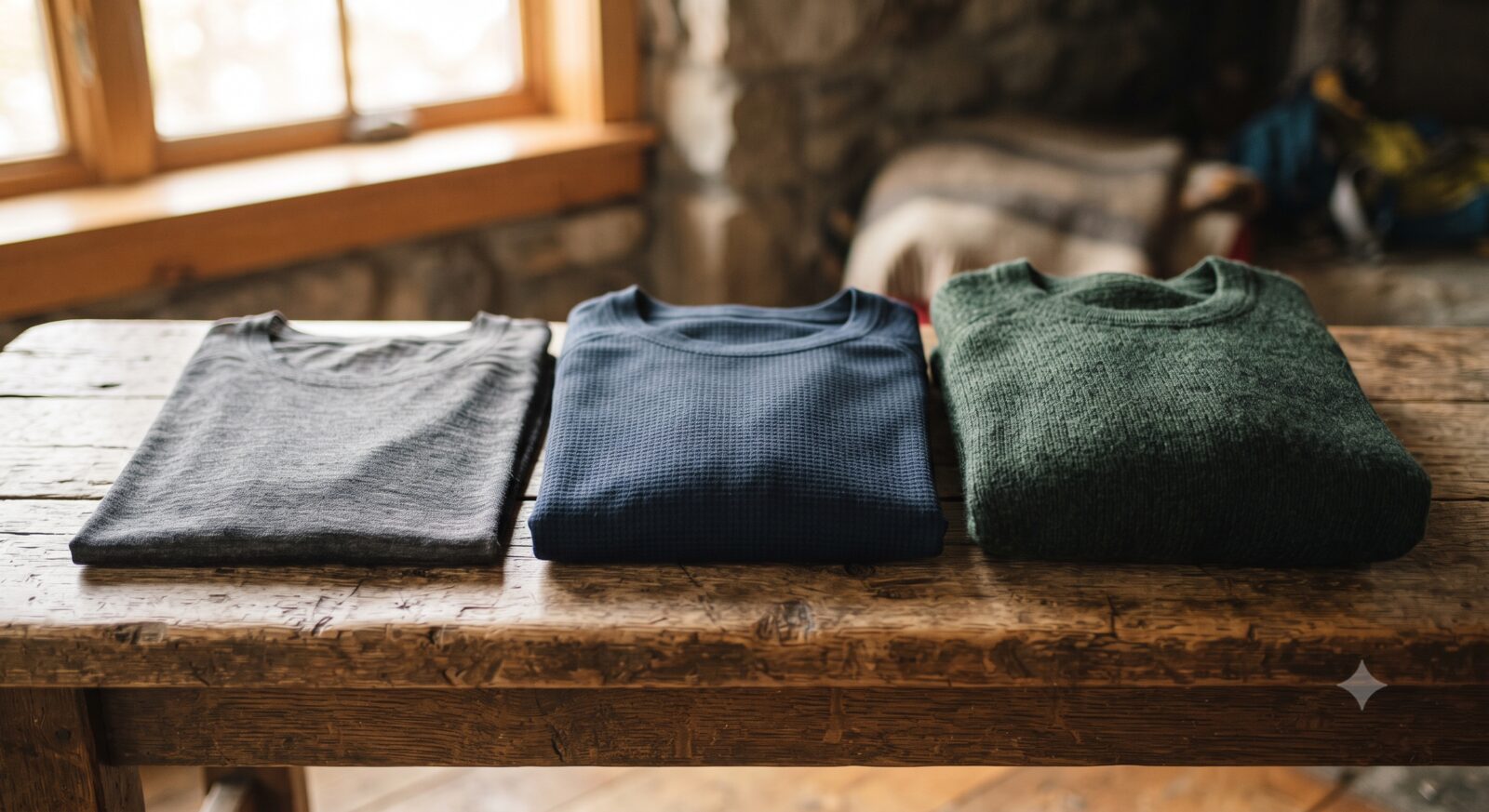
Lightweight: Built for Exertion, Not Standing Still
A lightweight base layer’s job is moisture management first and insulation second — it’s built to move sweat away from your skin during real physical exertion (a long hike into a backcountry spot, an early-season hunt where temperatures are still mild) without trapping excess heat. Wearing a lightweight base layer during a high-exertion hike and then sitting still for hours afterward is a common mismatch: it manages sweat well on the way in, but doesn’t provide enough standalone warmth once you stop moving and your body heat production drops.
Midweight: The Realistic Default for Most Hunts
Midweight base layers balance moisture management with real standalone insulation, which makes them the reasonable default for a hunt that involves both some walking and real stationary time — a typical treestand or blind sit in moderate cold, where you’re neither working hard continuously nor sitting through the most extreme conditions of the season. If you’re only going to own one base layer weight, midweight is the one that covers the widest range of realistic hunting conditions without leaving you underdressed or overheated at either extreme.
Heavyweight: For Genuinely Cold, Mostly Stationary Hunts
Heavyweight base layers prioritize maximum insulation over moisture management, which is the right tradeoff specifically for late-season hunts where you’re sitting largely still in serious cold — a stand or blind sit in genuinely low temperatures, where your body isn’t generating much heat through movement and needs the base layer itself to do more of the insulating work. Wearing heavyweight base layers during any real exertion is the mismatch to avoid here — they trap too much heat and moisture during activity, leading to overheating and then getting chilled once you stop and that trapped moisture cools against your skin.
The Actual Decision: Match Weight to Activity, Not Just Temperature
The mistake most people make is choosing base layer weight purely by outside temperature, when activity level matters just as much. A 30-degree hike into a stand calls for something lighter than a 30-degree hunt spent entirely sitting still, even though the thermometer reads the same in both cases — because your own body is generating meaningfully different amounts of heat in each scenario. If your hunt genuinely mixes both (a hike in, then hours stationary), owning both a midweight and a heavyweight option and layering or swapping between them, rather than trying to find one base layer that’s right for both halves of the hunt, is the more honest answer than forcing a single weight to do both jobs. King’s Camo’s XKG layering pieces are built as a genuine base-mid-outer system, which makes mixing and matching weights across pieces more straightforward than piecing together base layers from unrelated brands.
Fit Matters as Much as Weight
A base layer that’s too loose doesn’t do its job as well as one that fits close to the skin, regardless of weight — moisture-wicking and insulation performance both depend partly on the fabric maintaining reasonably direct contact with your skin. This is one more reason sizing matters even for a layer nobody else sees; see our guide on hunting jacket sizing and fit for how brand-to-brand sizing inconsistency applies here too, not just to outer layers.
Should I choose base layer weight based on temperature or activity level?
Both matter, but activity level is the piece most people underweight. The same temperature can call for a different base layer weight depending on whether you’re hiking in or sitting stationary for hours, since your own body heat production differs a lot between the two.
If I can only own one base layer weight, which should I get?
Midweight is the reasonable default for most hunters, since it balances moisture management and standalone insulation well enough to cover the widest range of realistic hunting conditions without leaving you underdressed or overheated at either extreme.
Does base layer fit actually matter if it’s hidden under other layers?
Yes — moisture-wicking and insulation performance both depend partly on the fabric staying in reasonably close contact with your skin, so a too-loose base layer underperforms compared to a properly fitted one, regardless of weight.