
This page contains affiliate links. If you make a purchase through one, we may earn a commission at no extra cost to you.
If your “waterproof” jacket has started soaking through and feeling heavy in the rain instead of shedding water, the waterproof membrane probably isn’t the problem — the outer water-repellent coating has worn off, and that’s a fixable maintenance issue, not a sign the jacket is failing.
What DWR Actually Does (and Why It’s Different From “Waterproof”)
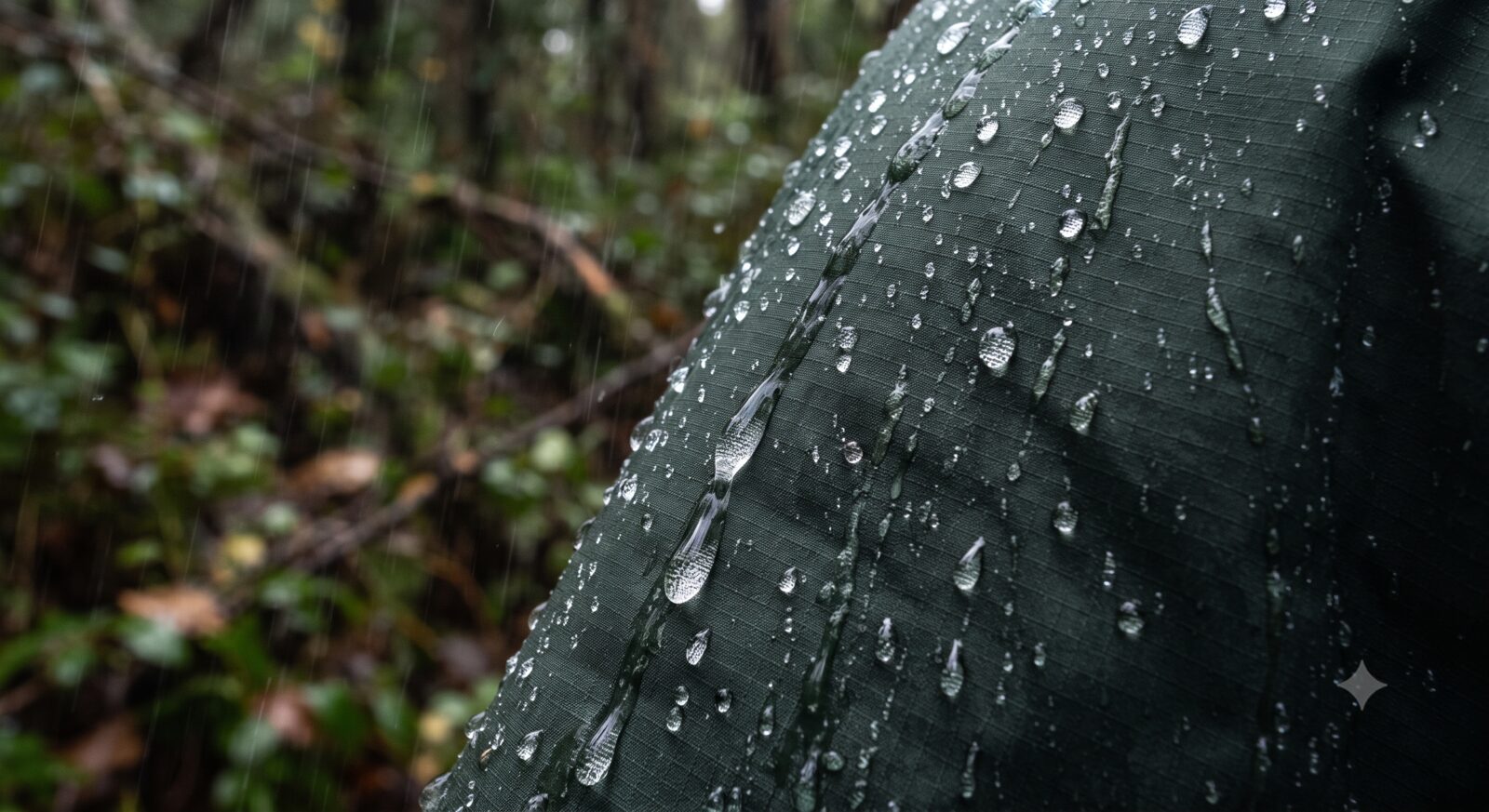
DWR (durable water repellent) is a coating applied to the outer fabric that makes water bead up and roll off rather than soaking into the material. It’s a separate layer from the waterproof-breathable membrane underneath, which is what actually stops water from reaching you. When DWR is working, rain beads and rolls off in visible droplets. When it’s worn down, the outer fabric absorbs water and gets heavy and dark (“wetting out”) even though the membrane underneath is often still doing its job perfectly fine — which is why a jacket can feel like it’s “leaking” when the real issue is just a worn coating on the surface.
The Simple Test: Does Water Still Bead?
You don’t need to guess whether your gear needs reproofing — pour a small amount of water on the fabric and watch what happens. If it beads up and rolls off, your DWR is still working. If it soaks in and darkens the fabric instead, it’s time to reproof. As a rough maintenance schedule, expect to reproof every 6 to 12 months with regular use, or after several washes, though actual timing depends heavily on how much wear and washing the gear actually gets.
Two Ways to Reproof: Wash-In vs. Spray-On
- Wash-in reproofer goes through the wash cycle with a technical-fabric-specific detergent, recoating the entire garment evenly. This is the better choice for a full garment that’s lost its repellency broadly, not just in one spot.
- Spray-on reproofer is applied directly to the outer fabric, left for a few minutes, then wiped off. It’s more convenient for targeting specific high-wear zones — shoulders, cuffs, the areas that take the most abrasion from a pack or brush — without treating the whole garment.
The One Washing Mistake That Actually Damages DWR
Regular laundry detergent is the real, common culprit behind premature DWR breakdown — standard detergents often contain additives and fabric softeners that coat the fibers and interfere with the water-repellent finish, actively working against the coating rather than just failing to help it. Using a detergent formulated specifically for technical outdoor fabric avoids this problem, and is a small habit change that meaningfully extends how long your gear’s water repellency actually lasts between full reproofing treatments.
Where This Fits With Scent-Control Washing
If you’re already following a careful wash routine for scent-control gear, reproofing is a genuinely separate concern worth tracking alongside it, not folding in — see our guide on washing and storing scent-control gear for that side of maintenance. A technical shell like King’s Camo’s XKG line benefits from both routines done correctly and separately, rather than assuming one washing approach covers everything the fabric needs.
My jacket feels wet on the outside during rain — is the waterproofing broken?
Probably not the membrane itself — this is usually the DWR coating wearing off, which lets the outer fabric absorb water (“wetting out”) even while the waterproof membrane underneath is still working. Reproofing typically resolves it.
How do I know if my gear actually needs reproofing?
Pour a small amount of water on the fabric. If it beads and rolls off, the DWR is still working. If it soaks in and darkens the fabric, it’s time to reproof.
Can regular laundry detergent damage a technical jacket’s water repellency?
Yes — many standard detergents contain additives that coat the fabric and interfere with DWR performance. A detergent formulated for technical outdoor fabric avoids this and helps the coating last longer between treatments.