
This page contains affiliate links. If you make a purchase through one, we may earn a commission at no extra cost to you.
Technical hunting gear is expensive enough, and doing enough real work, that washing it wrong is a genuine way to shorten its life or quietly undo what you paid for. The good news is the actual regimen is simple — it’s just different from how most people default-wash regular laundry. King’s Camo’s Polygiene-treated pieces are somewhat more forgiving of this regimen than carbon gear, worth knowing before you assume every technical piece needs the same strict routine.
Washing: What Actually Matters
Regular laundry detergent is the single biggest mistake here. Most mainstream detergents contain fragrance, brighteners, and softening agents that leave residue on technical fabric — residue that both defeats scent-control treatment (see our full scent-control breakdown for why this matters) and can coat moisture-wicking fibers, reducing how well they actually wick.
- Use a scent-free, dye-free technical detergent made for performance fabric, not a “free and clear” version of a regular scented detergent — those aren’t the same thing.
- Skip fabric softener entirely. Softener works by coating fibers, which is exactly what ruins moisture-wicking performance and can clog activated carbon if you’re running carbon-lined gear.
- Wash in cold or warm water, not hot, unless the care label specifically says otherwise — hot water breaks down technical fabric coatings and elastic faster than the fabric’s actual use does.
- Wash technical gear separately from regular laundry, not just a different cycle — residual scent and detergent from a shared load transfers between garments.
Drying: Where Carbon Gear Has a Real Extra Step
If you’re running activated-carbon scent-control gear, reactivation is not optional maintenance — it’s the step that makes the carbon technology function at all. That means a hot-dryer cycle (typically 20-40 minutes, check the specific product’s care instructions) to drive off trapped odor molecules and reopen the carbon’s adsorption capacity.
This is genuinely different from antimicrobial-treated gear like Polygiene, which doesn’t rely on heat reactivation the same way since it isn’t storing odor to begin with — a normal dry cycle is sufficient. Check which technology your specific gear uses (see our carbon vs. antimicrobial breakdown) before assuming a hot-dryer reactivation step is or isn’t necessary.
For non-carbon technical fabric, air drying or a low-heat tumble cycle is usually gentler on elastic, seams, and any waterproof-breathable membrane than repeated high-heat drying — high heat is only the right call specifically for carbon reactivation, not as a default for all technical gear.
Between Full Washes: The Multi-Day Hunt Problem
Washing after every single sit isn’t realistic on a multi-day hunt, and it also isn’t necessary — but gear left worn and unwashed between sits accumulates odor from the day’s exertion, so a full wash cycle isn’t the only tool available. Airing gear out fully (turned inside out, hung in open air away from the truck cab or tent interior) between wears does real work without needing a wash. A scent-elimination spray formulated for fabric can help as a supplement between full washes, but it’s a supplement, not a substitute — treat it as buying you an extra day or two, not as an alternative to actually washing the gear on a longer trip.
Rotating two sets of base layers, if you have them, solves this more reliably than any spray — wear one while the other airs out, and you’re never putting sweat-soaked fabric back on for a second sit without it having a chance to dry and off-gas first.
Storage: The Step That Undoes Everything Else
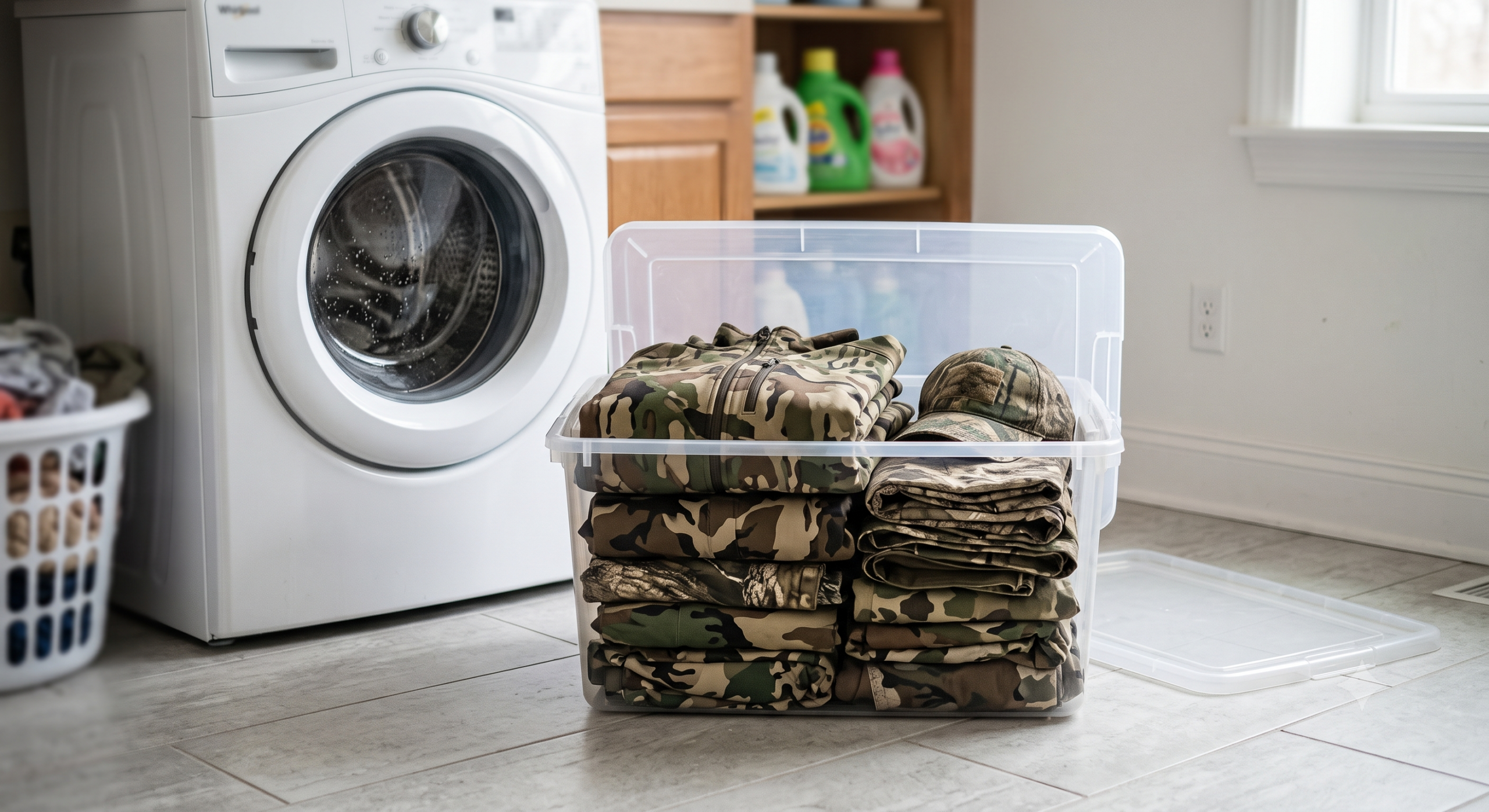
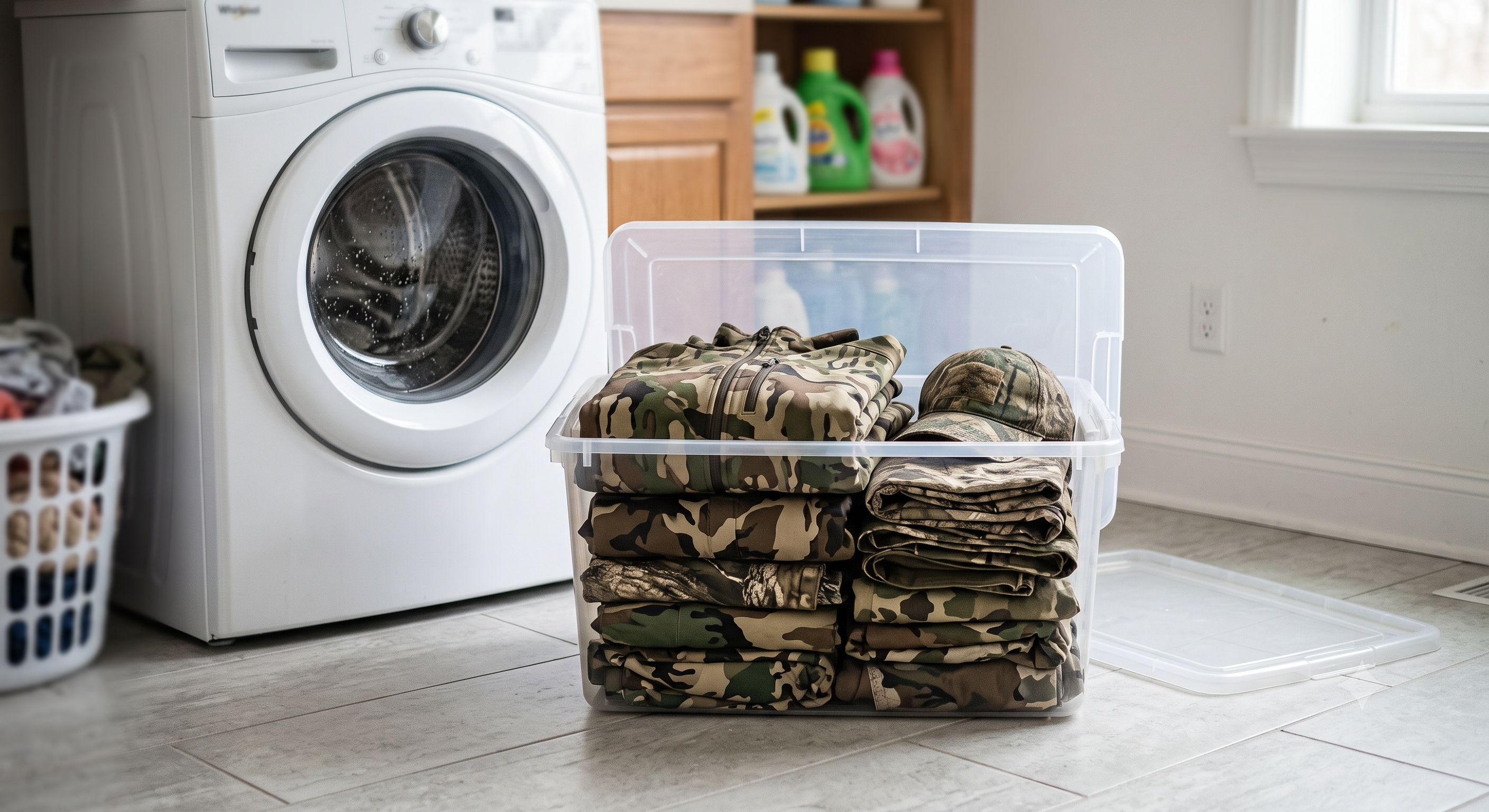
Correctly washed and dried gear left hanging in a closet, garage, or mudroom picks up ambient odor from paint, gas cans, pets, or whatever else shares that space — which quietly undoes the wash cycle you just did. A sealed plastic tote or a dedicated scent-free storage bag, kept away from garages and mudrooms specifically, is the actual fix. Some hunters add a scent-adsorbing packet or cedar block inside the tote, which is a reasonable extra step but not a substitute for a genuinely sealed container in the first place.
King’s Camo’s XKG pieces with Polygiene treatment are somewhat more forgiving here than carbon gear, since there’s no adsorption capacity to contaminate — but sealed storage still matters for keeping ambient odor off the fabric generally, regardless of which scent-control technology the piece uses.
See King’s Camo’s current lineup if you’re building a kit around lower-maintenance antimicrobial treatment rather than carbon gear’s stricter wash-dry-store cycle.
If you’re still deciding whether scent-control gear is worth this level of care in the first place, see our guide on whether scent-control hunting clothing actually works.
Frequently Asked Questions
Can I use regular laundry detergent on hunting gear if I run an extra rinse cycle?
Not reliably. An extra rinse helps but doesn’t fully remove fragrance and softening residue that mainstream detergents are designed to bond to fabric. A dedicated scent-free technical detergent is the more consistent fix.
How often should carbon gear be reactivated?
Check the specific product’s care instructions — schedules vary by brand and carbon type, but most recommend reactivation after every few wears or after extended exposure to open air without use.
Does antimicrobial-treated gear need the same washing regimen as carbon gear?
The scent-free detergent and separate-load rules still apply, but antimicrobial gear doesn’t need the hot-dryer reactivation step carbon gear requires, since it isn’t storing trapped odor the same way.
Is a cedar block or scent packet enough on its own for storage?
Not as a replacement for sealed storage. These help inside a genuinely sealed tote or bag, but they don’t block ambient odor from an open closet or garage the way a sealed container does.