
This page contains affiliate links. If you make a purchase through one, we may earn a commission at no extra cost to you.
Short answer: scent control clothing helps, but it’s not a cloaking device, and it only does what it claims if you actually run the regimen behind it. A deer’s nose is somewhere between 500 and 1,000 times more sensitive than a human’s — no fabric treatment closes that gap on its own. What it can do is buy you margin on the edges: a swirling thermal, a stand you can’t fully wind-proof, a morning where the breeze isn’t as clean as you’d like.
Two Different Technologies, Not One
“Scent control clothing” gets used as a catch-all, but there are two genuinely different mechanisms sold under that label, and they don’t work the same way or have the same limitations.
- Activated carbon. The fabric is lined or impregnated with carbon that adsorbs odor molecules — physically traps them in the carbon’s porous structure. This is the older, more familiar technology (Scent-Lok popularized it). It works, but it has a hard limit: the carbon saturates. Once it’s full, it stops adsorbing anything new until it’s reactivated.
- Antimicrobial/silver-ion treatments. Instead of trapping odor after it forms, this approach stops it at the source by suppressing the bacteria that produce most human body odor. King’s Camo’s XKG line uses Polygiene, a silver-chloride treatment applied to the fabric itself.
These solve different problems. Carbon is fighting a broader range of odor sources (breath, food smell, campfire smoke) but needs constant maintenance. Antimicrobial treatment is narrower — it’s specifically targeting bacterial body odor — but it doesn’t saturate the same way, because it isn’t storing anything.
The Carbon Reactivation Limit Nobody Puts on the Hangtag
If you’re running carbon-lined gear, the maintenance step is non-negotiable: the carbon has to be reactivated in a hot dryer (typically 20-40 minutes on high heat) to drive off the trapped odor molecules and reopen the carbon’s capacity to adsorb more. Skip that step and the suit is functionally just a normal jacket by your third or fourth sit.
What most buyers don’t find out until they’ve owned the gear a season or two: carbon has a finite number of reactivation cycles before its adsorption capacity meaningfully degrades. It isn’t a one-time investment that performs identically for its whole lifespan — it’s a consumable that wears out on a schedule most marketing doesn’t mention. This isn’t a knock on carbon technology, it’s just the honest maintenance cost that has to factor into whether it’s worth it for how often you actually hunt.
Where King’s Camo’s Approach Fits
King’s Camo’s XKG pieces use Polygiene rather than carbon, which sidesteps the saturation problem entirely — there’s nothing to fill up, because the treatment is suppressing bacterial growth on the fabric rather than capturing odor molecules that pass through it. The tradeoff is honest and worth stating plainly: it’s not doing the same job as a full carbon suit against non-bacterial odor sources like breath or food. It’s a real piece of a scent-management system, not a replacement for wind awareness, and King’s Camo doesn’t market it as one — it’s positioned as multi-day-usable, low-maintenance odor control built into gear you’d want to wear for its fit and quiet fabric anyway, not as a standalone cloaking claim.
See King’s Camo’s scent-control lineup if you want the antimicrobial treatment built into your base and mid layers rather than added as a separate suit on top.
The Regimen Is the Product, Not the Fabric
This is the part that actually determines whether any scent control gear does anything for you, regardless of which technology you buy:
- Wash with scent-free detergent, separately from regular laundry. Regular detergent leaves fragrance residue that undoes the point of the whole system.
- No scented soap, shampoo, deodorant, or laundry sheets on hunt days. This is the step most hunters skip, and it’s often the biggest source of detectable scent — bigger than the clothing itself.
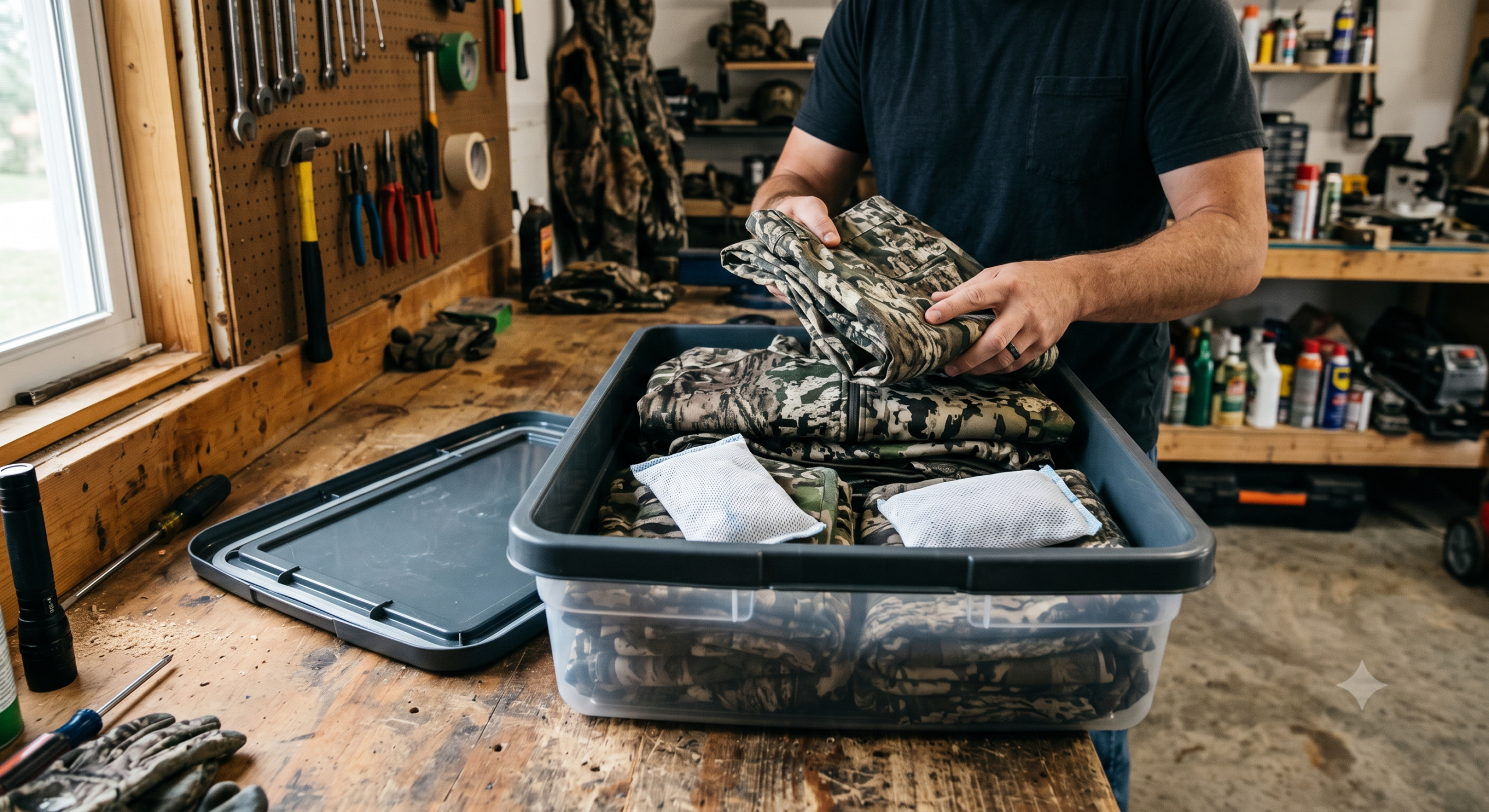
- Store gear in a sealed tote or bag, not hanging in a closet or thrown in the truck. Clothing absorbs ambient odor from wherever it sits, and a garage or mudroom full of gas cans and dog smell will contaminate a carbon suit just as effectively as skipping a wash cycle.
- Dress at the truck or trailhead, not at home. Every minute spent in the gear before you’re actually hunting is a minute it’s picking up ambient household odor.
A hunter who’s diligent about all four of these with budget gear will out-perform a hunter with premium carbon gear who showers with scented body wash and keeps the suit in a garage. The fabric is a multiplier on the regimen, not a substitute for it.
What Scent Control Doesn’t Fix
Independent testing on carbon suits’ real-world effectiveness is genuinely mixed — there’s no scientific consensus that they defeat a deer’s nose outright, and manufacturers rarely cite controlled third-party studies to back the strongest marketing claims. Treat scent control as one layer of risk reduction alongside the fundamentals that actually determine most stands: wind direction, thermal shifts at dawn and dusk, and stand placement relative to travel corridors. If those three are wrong, no suit fixes it. If they’re right, scent control is what buys you the margin on the days the wind isn’t perfectly cooperative. King’s Camo’s scent-control pieces are worth a look specifically as one part of that broader margin, not a replacement for it.
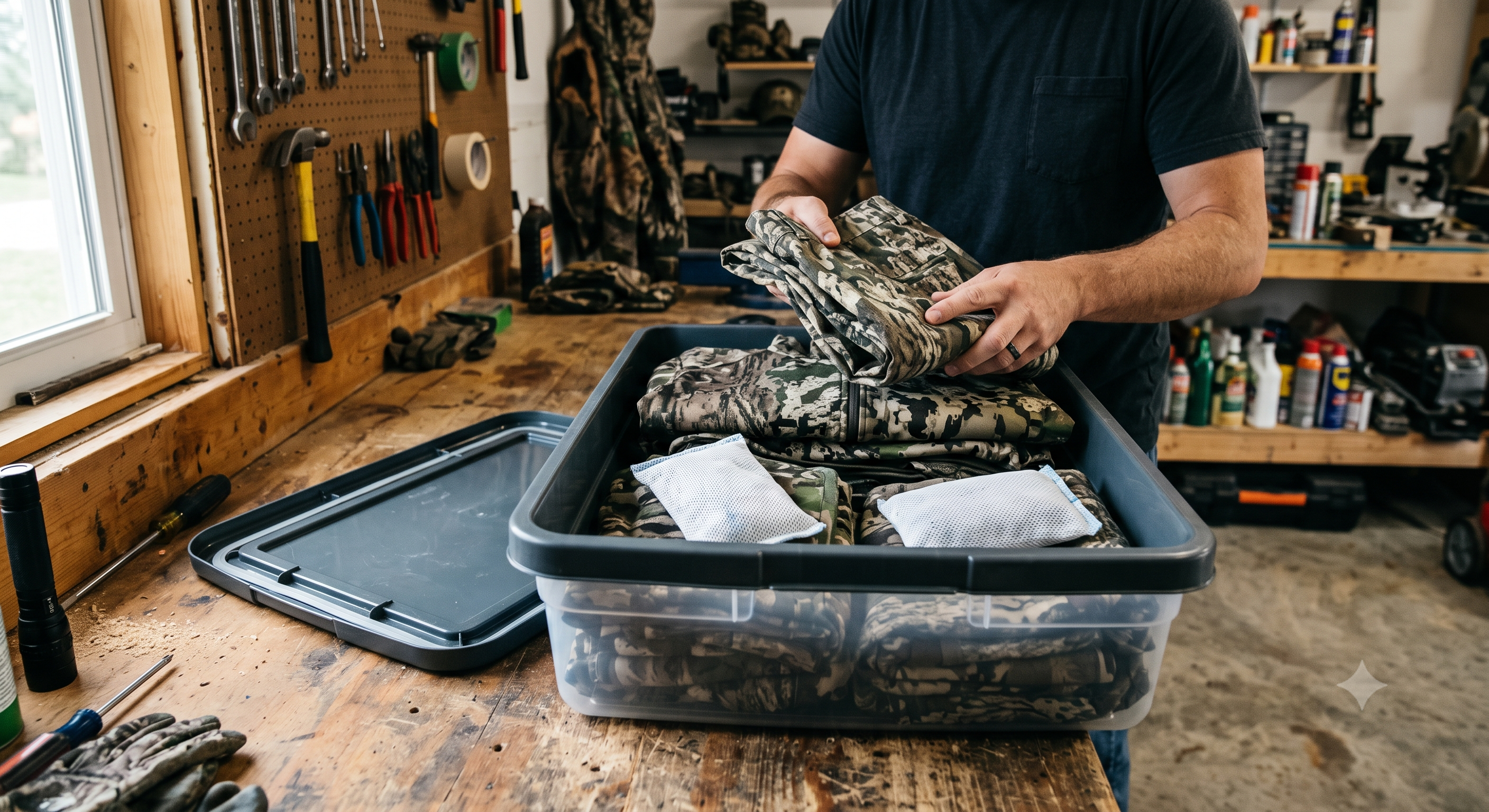
Once you’ve got scent-control gear worth protecting, see our guide on how to properly wash and store it so it keeps doing its job.
Frequently Asked Questions
Is carbon or antimicrobial scent control better?
Neither is universally better — they solve different problems. Carbon covers a broader range of odor sources but requires regular high-heat reactivation and eventually wears out. Antimicrobial treatment is lower-maintenance and doesn’t saturate, but it’s specifically targeting bacterial body odor, not breath or food smell.
How often does carbon-lined gear need to be reactivated?
Most manufacturers recommend reactivating after every few wears, or any time the suit has been exposed to open air for an extended period without use. Check the specific product’s care instructions — reactivation schedules vary by brand and carbon type.
Does scent control clothing actually fool a deer’s nose?
No single product eliminates human scent outright. The honest framing is risk reduction, not invisibility — scent control clothing reduces the odor you’re putting into the air, which can matter on marginal-wind days, but it doesn’t replace playing the wind correctly.
Do I still need to shower with scent-free soap if my clothing has antimicrobial treatment?
Yes. Antimicrobial fabric treatment addresses odor generated on the fabric itself, not scented products on your skin and hair, which off-gas independently of what you’re wearing. The two aren’t a substitute for each other.