This page contains affiliate links. If you make a purchase through one, we may earn a commission at no extra cost to you.
Cold-weather layering has a real, well-documented system behind it — and most of the mistakes that ruin a cold sit come from ignoring that system, not from having the wrong gear.
The Three-Layer System, Explained Properly
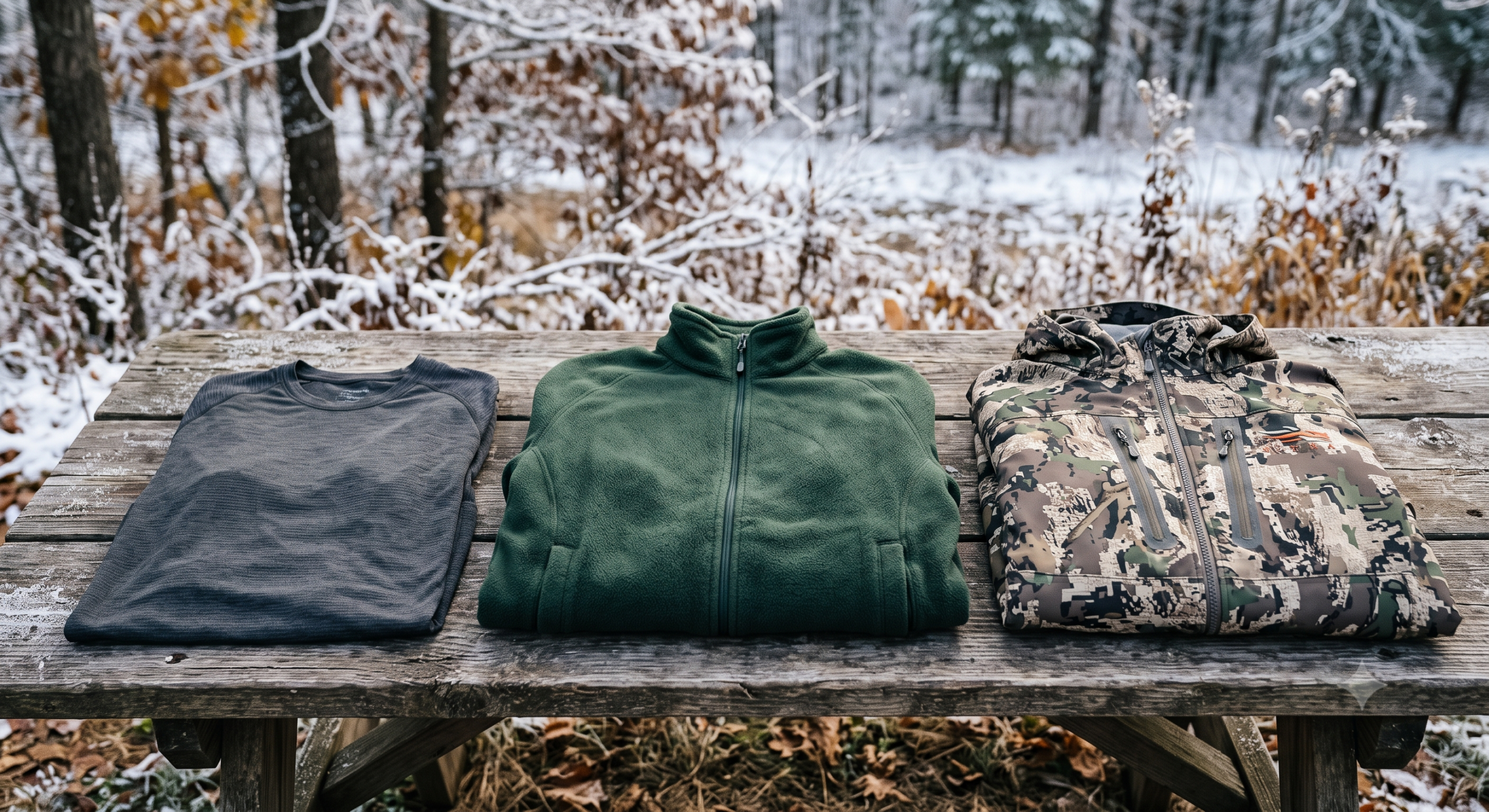
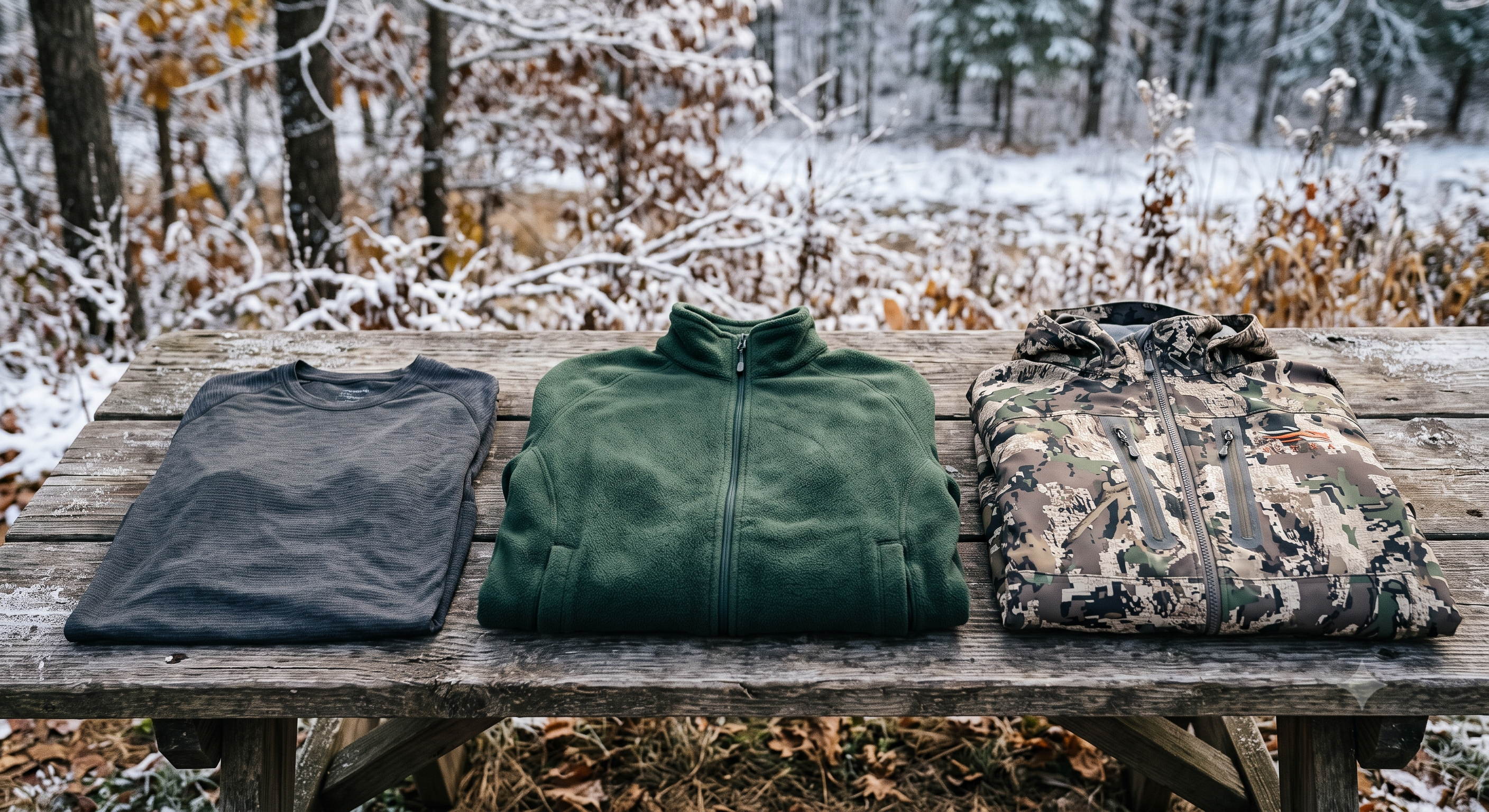
A functional cold-weather system has three distinct jobs, handled by three distinct layers:
- Base layer — moisture-wicking. Its only job is moving sweat off your skin before it has a chance to sit there and cool you down. Everything else in the system depends on this layer actually doing its job.
- Mid layer — insulating. Traps warm air near your body. This is the layer most people think of as “the warm one,” and it’s doing real work, but only if the base layer beneath it isn’t already soaked.
- Outer layer — protective. Blocks wind and precipitation from stripping away the warm air the mid layer worked to trap, and keeps external moisture from getting in.
Each layer only works if the one beneath it is doing its job — a great insulating mid layer over a cotton base layer that’s already wet from sweat is fighting a losing battle from the start.
Mistake One: Overdressing From the Start
This is the single most common cold-weather mistake, and it’s counterintuitive: dressing too warm at the start of a hunt, particularly during the walk in, causes you to sweat — and that sweat-soaked base layer is exactly what causes dangerous heat loss later once you’re sitting still and your body isn’t generating the same heat. The fix isn’t complicated but does require some discipline: dress slightly cool for the walk in, expecting to warm up from exertion, rather than dressing for how cold it feels standing still at the trailhead.
Mistake Two: Cotton, Anywhere in the System
Cotton absorbs moisture and holds onto it, rather than moving it away from your skin the way a genuine moisture-wicking fabric does — and once cotton is wet, it actively pulls heat away from your body far faster than staying dry would. This applies to the base layer specifically, where cotton’s failure mode is most dangerous, but it’s worth checking mid layers too — a cotton hoodie under a technical jacket defeats a big part of what the rest of the system is trying to do.
Mistake Three: Overly Tight Layers
Layers that fit too tightly restrict circulation, and reduced blood flow to your extremities is exactly what makes hands and feet go numb first in cold conditions — often faster than core body temperature would predict. Insulating layers specifically need enough room to trap a layer of warm air, which is literally how insulation works; a mid layer compressed too tightly against your body loses much of its actual insulating capacity, regardless of how warm the fabric is rated to be.
Building the System With King’s Camo
King’s Camo builds their technical layers around exactly this three-part logic rather than a single do-everything jacket, which matters because a system built as separate, purpose-built layers lets you actually adjust for conditions instead of being stuck with one fixed warmth level regardless of whether you’re hiking in or sitting still in a stand. Their XKG line specifically is worth a look if you’re building a layering system from the base up rather than replacing one piece at a time.
See King’s Camo’s current layering pieces to build a system rather than buying one jacket and hoping it covers every condition.
Adjusting the System Mid-Hunt
A layering system’s real advantage over a single heavy jacket is that it can be adjusted as conditions and activity level change through the day — shed the mid layer during an active stalk, add it back once you’re settled into a stand for an extended sit. This only works if you actually treat it as adjustable rather than putting everything on once at the truck and leaving it there for the whole day regardless of how your activity level changes. Packing the mid layer separately, rather than wearing it the entire time, is a small habit that meaningfully reduces the overdressing-and-sweating problem covered above.
What “Breathable” Actually Means for the Outer Layer
A genuinely good outer layer blocks wind and precipitation from coming in while still letting some water vapor escape from the inside — a fully waterproof-but-non-breathable shell traps your own sweat inside the system just as effectively as an external soaking would, defeating the base layer’s whole job. This is worth checking specifically when choosing an outer layer, since “waterproof” alone doesn’t guarantee “breathable,” and the two properties genuinely trade off against each other in cheaper fabric constructions. King’s Camo’s outer layer pieces are one real example worth checking against this specific tradeoff before buying.
How you layer should also shift with the calendar — see our guide on early-season vs. late-season hunting clothing for how this system adjusts as the weather changes.
Frequently Asked Questions
Is merino wool actually better than synthetic base layers?
Both work well for moisture management. Merino resists odor buildup better over multi-day hunts; synthetics typically dry faster and cost less. Neither is objectively wrong — it comes down to trip length and budget.
How do I know if I’m overdressed before I start sweating?
A reliable rule of thumb: if you feel comfortably warm standing still at the trailhead, you’re likely overdressed for the walk in. You should feel slightly cool for the first few minutes, then warm up from movement.
Do I need all three layers even for a mild-cold hunt?
Not necessarily at full weight — the system scales. A lightweight base and a wind-resistant outer layer without a heavy mid layer can be enough for mild conditions; the three-part logic still applies even when you’re not stacking maximum warmth at every layer.
What should I do if my base layer gets wet from sweat mid-hunt?
If you have a dry spare, change it during a break rather than waiting until you’re sitting still and already cooling down. A genuinely wicking base layer that’s soaked has lost most of its function until it dries.